
Each August for the last 10 years, I’ve written a column about Penn State’s newly-arrived international students. Why that emphasis, you ask?
Well, to put it bluntly, our campus and community would be relatively bland without these foreign-born folks. Even though I’m a proud native of Central Pennsylvania, I’m telling you that folks from places like India, Peru and Saudi Arabia add a spice to Happy Valley that can’t be provided by students from State College, Bellefonte, Philipsburg or even Philadelphia.
Each year I seek to talk with international “kids,” and I often discover there’s a unique sub-plot to their stories. What would it be this year?
- In 2020, I realized it was all about COVID—so I asked the students to describe the courage needed to enter a strange new land where everyone was now wearing masks.
- In 2022, I invited new arrivals from around the world to share their pride over the fact that a former international student, Dr. Neeli Bendapudi, had become president of their new university.
- And in 2024, I talked to international students about the inconvenience—even despair–caused by the last-minute shutdown of Megabus, the transportation link they had trusted to bring them from New York’s JFK Airport to Penn State.
This year, I thought our conversations might focus on the difficulties caused by the U.S. government’s new visa regulations. However, very few of the 16 students I interviewed had anything to say on that topic. Perhaps some of them feared reprisals if they voiced a negative view of the U.S. government. But I think most of them had jumped over the visa hurdle and were now focused on academic and cultural adjustments.
IT’S ALL IN THE FAMILY
So what theme did I encounter most often when talking to this year’s international freshmen and new graduate students? To my surprise, I heard many of Penn State’s incoming internationals talking about how much they’ll miss their parents and other loved ones. Perhaps more than ever before.
For example, I asked Julio Villarreal, a freshman from Mexico, to mention the biggest challenge he will have in adapting to life here. And his answer? “Family time. In Mexico, it’s so common for families to be so close together. Every Sunday you go visit both of your grandparents’ houses. I think that going to be the toughest thing to adapt to, being so far from family.”
But Julio wasn’t without potential solutions to his void. “Hopefully,” he said, “FaceTime (with his family) can replace a little bit of that nostalgia that I will feel. And there’s a really big community of Latin students here. So speaking Spanish, hearing words that I usually hear at home, will make me feel more comfortable.”
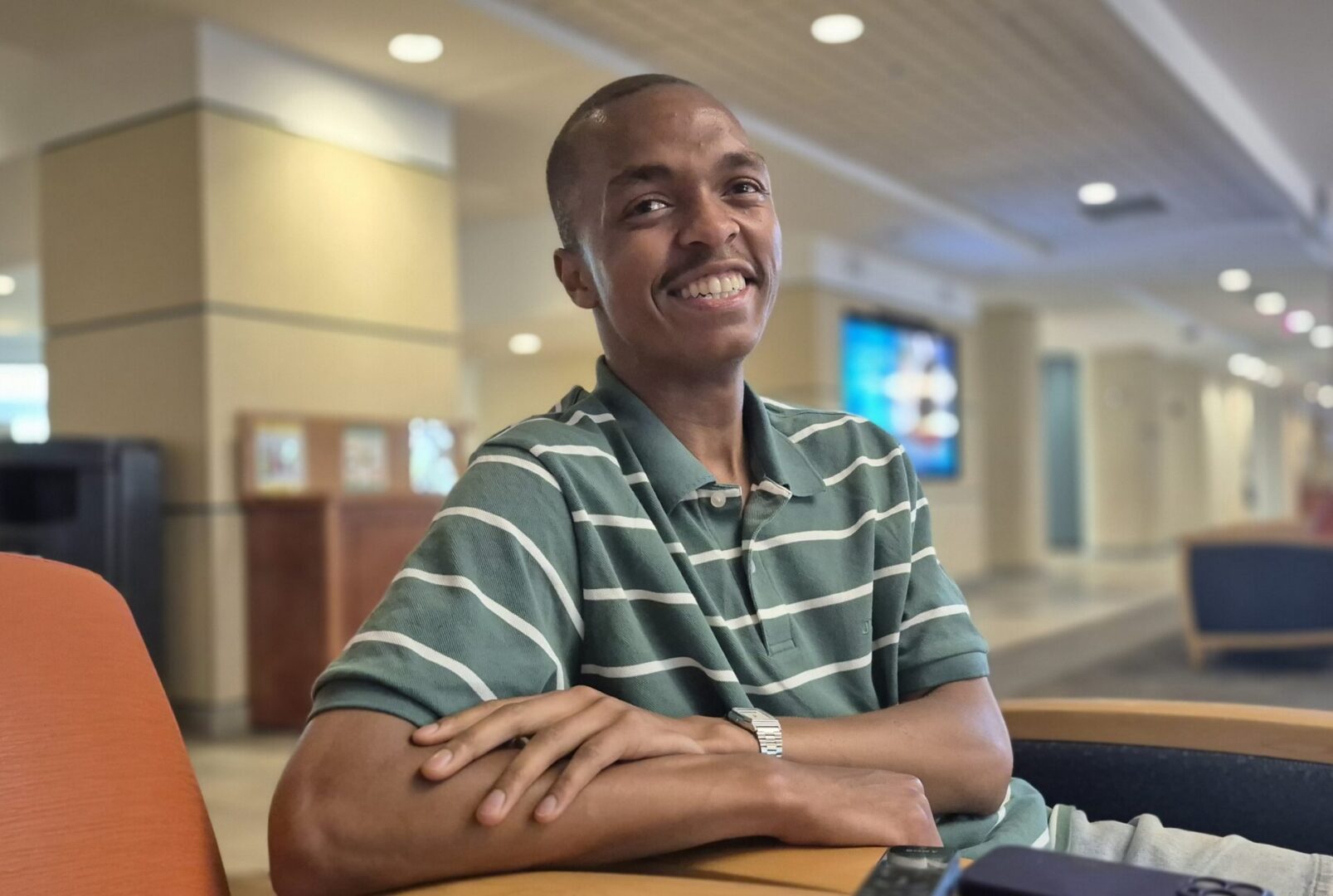
Tala Bazedan, a freshman from Saudi Arabia, noted that her parents came here to help her settle in. “But, she noted, “leaving my grandpa and my aunts and uncles, it’s hard. It’s just hard on everybody, even my parents. But I guess that’s life and you’ve got to push through it.” Meanwhile, her countryman and fellow freshman, Hashim Aqeel, told me a similar story when we spoke in a nearby corner of the Hetzel Union Building. “This is the first time I’m away from my family,” he said. “It’s something completely new…Very different.”
Sebastian Berrocal is a new master’s student from Peru. Asked to share his biggest fear about living in America, he said, “Maybe missing my family too much. You can always make new friends here, but you’re going to miss your home country and the people that you love there.” And then he showed me a photo of a very cool painting he had created. Although it’s rather avant-garde in style, the art portrays his grandmother as his hero.
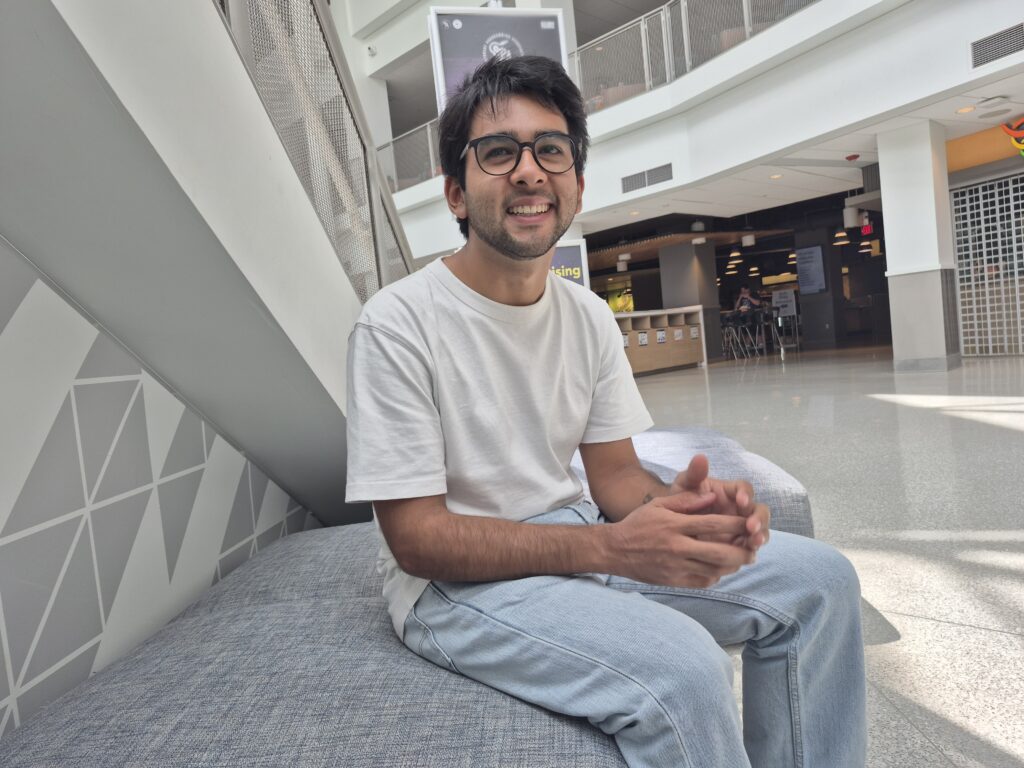
Regardless of students’ home culture, the theme of missing family kept popping up. Swarantej Sanika is an 18-year-old freshman from India, and he mentioned that his parents carefully hid their emotions while bidding him goodbye at the airport. “I knew that they had some tension or something like that,” said the incoming engineering student, “but they never actually showed it to me. If I saw them crying or feeling sad, that would demotivate me.” He does not expect to see his parents again until he is able to travel home next summer.
Siyabonga Mabuza faced an especially difficult goodbye experience when he recently left his home in Eswatini (formerly Swaziland) to come here. Siyabonga had earned a bachelor’s degree at Skidmore College in New York State and then worked a year in New York City, so his time in Africa felt very inadequate. “I had been away from home for a long time,” he said, “so after I went home for a month and a half, leaving was very difficult to do. As much as I’m so excited about the opportunity to be here… I have two parents, my siblings, my friends from primary school, high school. Everyone’s back home. And the last few days of me being home, my friends would just drive up to the house every day for an excuse to see me. They had no reason to be there, but they’re just like, ‘Oh, I forgot my jacket,’ or ‘Oh, I just came to have some tea.’ Just any excuse to come see me… We just love to be with each other.”
FIRST IMPRESSIONS OF HAPPY VALLEY
But missing home and family wasn’t the only subject I discussed with these new students. Often I heard comments about our community—almost always favorable. “Clean and green” seemed to dominate the comments of most, but something akin to “the middle of nowhere” also popped up—especially for those whose first glance revealed cornfields and forests without any hint of a massive university.
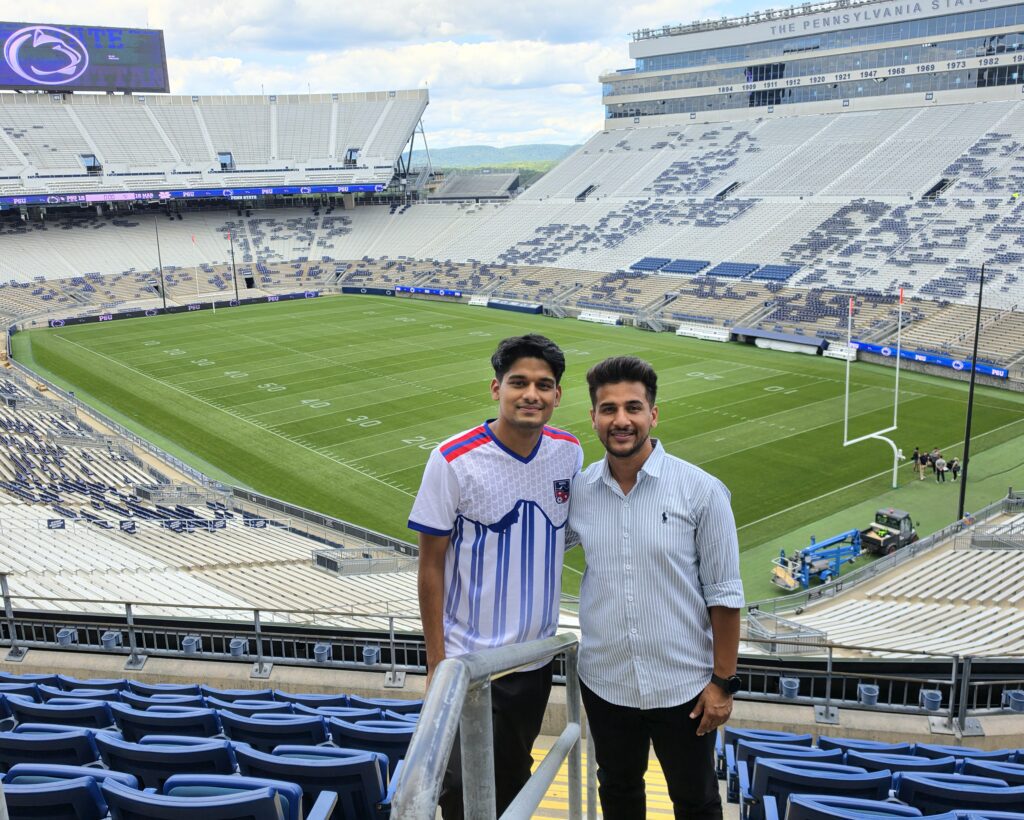
Rohan Devkota is a recent arrival from Nepal who is pursuing a Ph.D. in civil engineering. “I was born in Kathmandu,” he said, “a beautiful place. But since it is our capital with a lot of people and it’s in a valley, the air is very polluted. Here, everything is green, there are lots of parks and the air felt fresh.” (Devkota and his countryman, Mukesh Pant, found their way out to Beaver Stadium and took an informal tour of the facility. Given that the largest sports stadium in Nepal, seats approximately 18,000 people, it’s not surprising that the men were overwhelmed. Said Devkota, “It was so big. I had never seen such kind of stadium in my whole life, so it was an amazing experience.”)
Alhasan Alhefdhi is a new freshman from Saudi Arabia who earned his high school degree in Florida through an exchange program. He was immediately impressed with State College, especially its downtown area. “My first impression,” he said, “is that State College is extremely culture-friendly. I met people from all different parts of the world, especially in the shops. I really like the downtown; I love it. It’s very walkable.” He also appreciated the friendliness of an Uber driver who noted that winter is coming and said he should buy an electric blanket as soon as possible.
Jeewan Jeon, a native of South Korea, has come to Penn State to seek a doctorate in psychology and plans to study perseverance, resilience and motivation in children and adolescents. Although she appreciates the beauty of this region, she was initially perplexed when arriving by automobile. “I was kind of surprised,” she told me, “because on the map (GPS) it said something like 12 minutes left to my place, but there was nothing beside the road. It was just the road. So I asked the driver, ‘Is this State College?’ And he said, ‘Yeah, this is how it is.’ So then I knew it’s quite a small town.”
Julio Villarreal, the Mexican student mentioned above, was also confused upon arrival in Happy Valley. “I kind of felt like a small regret and I was confused,” he said. “I had talked with my friend who is here. He’s also from my hometown. And he painted it as a really fun, live, vibrant city. And I just didn’t see it when I landed here. There weren’t any street lights. I was so confused and I couldn’t picture myself for four years here.”
But after just a few days, Villarreal’s view was completely changed. “It’s beautiful,” he said. “It’s like everything I expected it to be, a college town. Where I’m from, we usually drive everywhere and there’s lots of traffic. But here you can just walk and it’s so nice to have everything so close to you. And it’s really clean, super-walkable, with lots of green areas.”
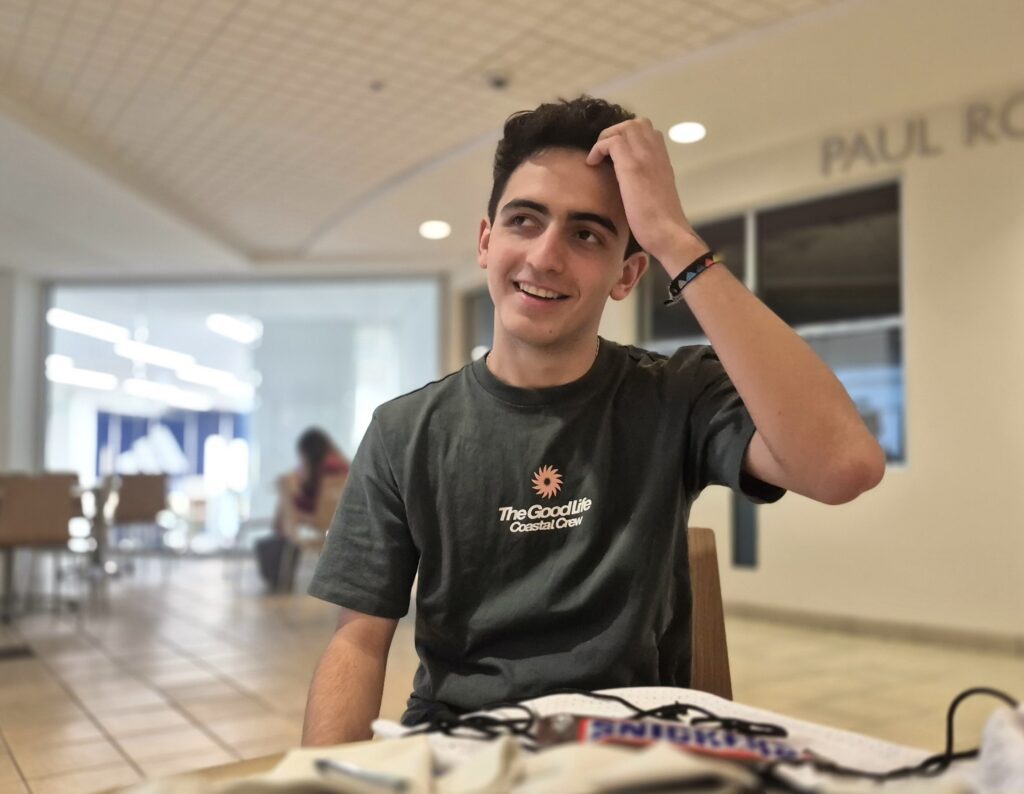
Villarreal was especially impressed by Penn State’s programs for freshman orientation. He has hometown friends at Princeton, Duke, Indiana University, Notre Dame and the University of Wisconsin, and according to the new Penn Stater, “None of them had such a big orientation. We had two days with lots of bonding, small group activities, a tour of the campus. Most of them had it online, and some didn’t even go. I really like how they do things here. Honestly, I think I’m going to be the one everyone will visit. This is going to be the place everybody’s going to come because it’s so fun.”
BARRIERS TO CONQUER, GOALS TO REACH
The average international student—if there is such a person—has already shown great promise and has already benefited from the invested time and money of parents, teachers and educational institutions. What are their goals as they put down roots in State College?
Elina Soskina earned her bachelor’s degree at Cornell, having matriculated just after her nation of Ukraine was attacked by Russia. Now at Penn State, she appreciates the chance to pursue a Ph.D. in mathematics, another step toward her goal of becoming a professor and doing so at another topflight university in a small college town.
How have people treated her since she arrived in State College? “I don’t tell everybody that I’m from Ukraine,” said Elina. “If they don’t ask, I never do. But the professor I came to work with, he’s also from Ukraine and he has Ukrainian students. So I have a great deal of support, personal support.”
Although she may worry occasionally about academics, Elina said, “I have other great fears that are more related to my country.” Regardless of the source of her stress, she enjoys the calming influence of a walk around State College. “I feel like the nature here is very similar to the nature in my country,” she said. “When I came here, I was like, ‘Oh, I’m at home.’ So it’s really nice to just walk around the streets and feel like it’s very serene, very safe.”
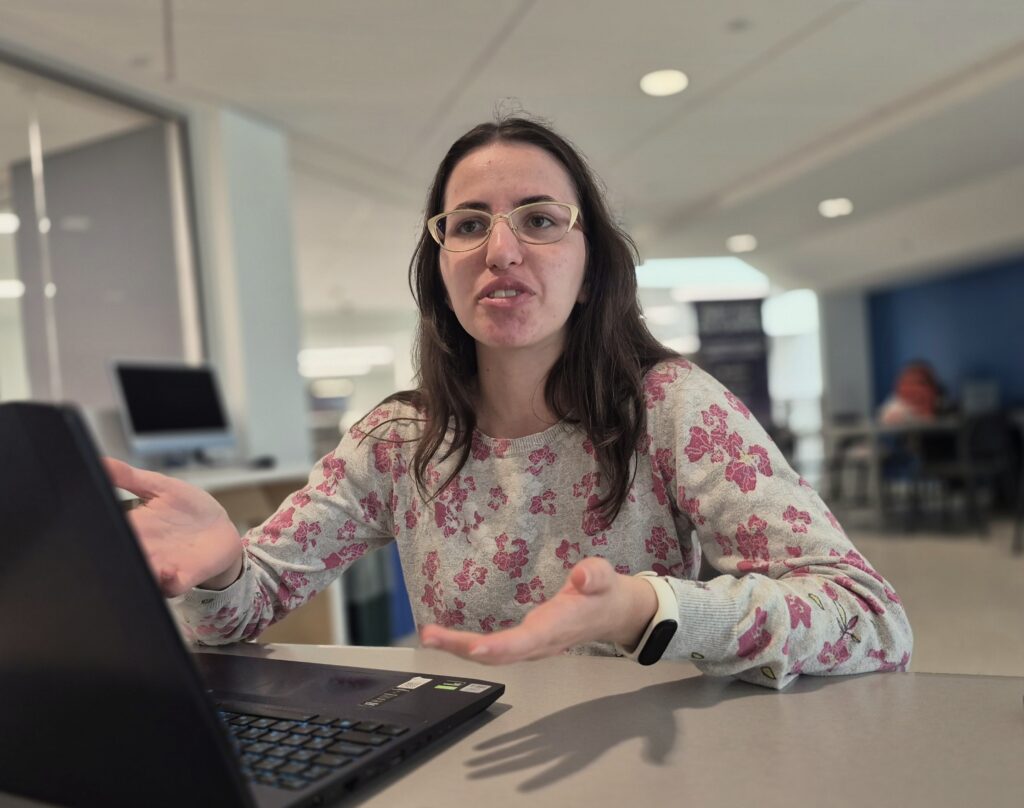
David Kim is a South Korean who will seek to earn a master’s degree in international relations. He already has amazing language credentials for such work, having enhanced his English while completing his high school education in Canada and polishing his Japanese while doing his undergraduate studies at a university in Tokyo. In addition to his native Korean, he also speaks German and Chinese at a beginner’s level. Although Kim could have earned his master’s in his homeland for a lot less money, he received a generous scholarship from Penn State. And as he noted, “I thought I should go to the center of the global international relations, and the United States is at the top.”
Arijit Haldar of India has his sights set on earning a Ph.D. in chemistry and ultimately serving as a research professor. His focus is on nanomaterials, super-tiny forms of coinage metals that emit light and that can play a role in culturing cells or producing energy. Pleased with his new surroundings in Happy Valley, Haldar is concerned with only one hurdle—maintaining consistent motivation throughout his doctoral program. “I need to be motivated all the time,” he said, “but in research, we don’t get good results every day. So then we may be demotivated at times and that’s when I’ll need to really concentrate.”
Although Rohan Devkota and Mukesh Pant had never met in Nepal, their mutual arrivals at Penn State led to a friendship here. Both share the same motivation: to contribute to the development of their home nation. For Pant, that means learning new techniques for apple and pear production. According to the new master’s student in plant science, Nepal has an excellent climate for fruit but “the farmers are not well-educated, and they practice traditional means of farming. So because we don’t have a better yield in apples and pears we have to import a lot of this fruit from China and India.”
Meanwhile, Devkota will be focused on transportation safety during his doctoral studies here. Although he’s eager to complete his degree so he can contribute to his homeland’s progress, he wants “to do something very impactful,” says the 23-year-old. “Back home, we do not have proper transportation planning. For example, traffic intersections here are controlled by traffic lights, but back home you’ll see two or three traffic police standing at each and every intersection.”
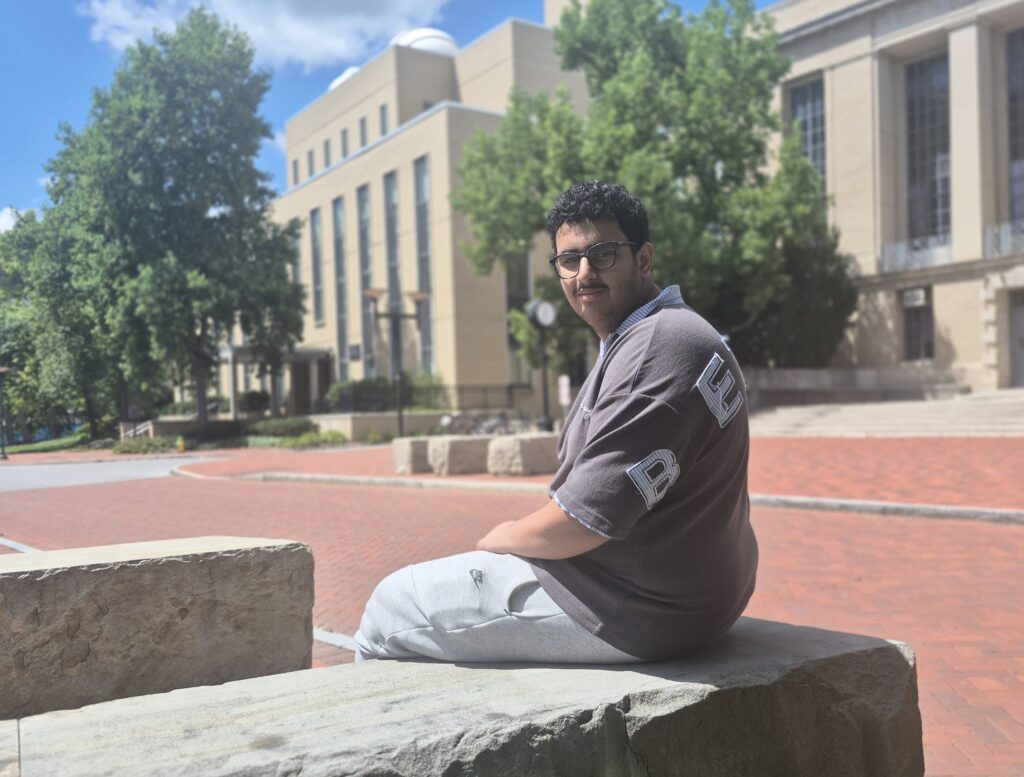
Of all the new students I met, surely none is more ambitious than Alhasan Alhefdhi, the new freshman from Saudi Arabia who previously studied in Florida. Without a shred of exaggeration, he told me that he intends to finish his bachelor’s degree with two majors and two minors. His intended majors are electrical engineering and computer engineering; the minors are AI engineering and computer science.
Some might sell Alhefdhi short, claiming he’s just a freshman kid who’s out over his skis. But there’s a certain determination about this young man from The Kingdom that makes me take him seriously. “One of the things I’m scared of,” he said to me, “is getting to a time later in life and regretting that I didn’t do something when I was younger. So I just do everything, even if something is a little hard today.”
More Latest Penn State News
View all Latest Penn State News
Judge Grants Penn State Fraternity Access to House After Members Were Locked Out on Move-In Day
A Centre County judge on Tuesday issued an order allowing Penn State fraternity members to return to their off-campus house after they said they were locked out by their landlord […]
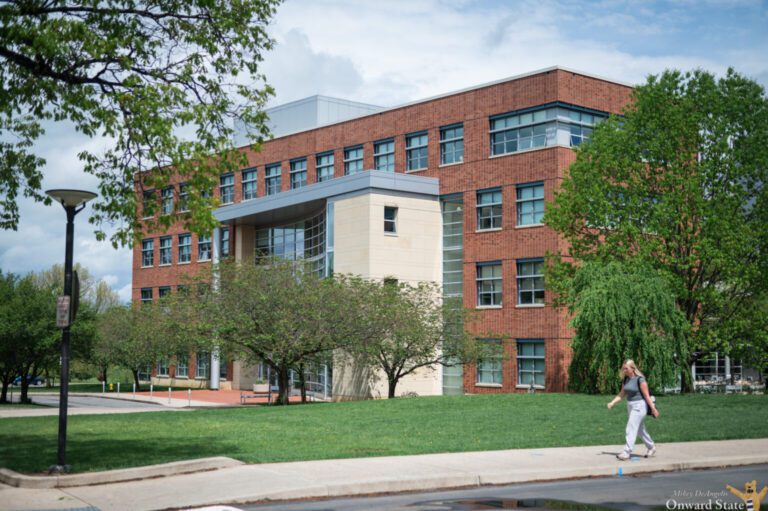
Dunkin’ and Jimmy John’s to Open in Penn State Business Building
Two national chains will offer new dining options in a busy Penn State academic building. Dunkin’ and Jimmy John’s will open this fall in the café space of the Business […]
How Continuing Education at Penn State Equips Today’s Workers With Skills They Need Now
The needs may be different, and the format may have shifted since its launch in 1967, but at its core, Penn State Continuing Education continues to do what it has always done: equip Pennsylvanians to work in the industries that…


